
I learned what work meant before I learned to drive.
Starting at ten years old, every fall brought the same ritual. First weekend in September, my dad and I would head into the woods of rural western Connecticut before sunrise. We had until first snowfall to cut enough firewood to heat our house through winter—and in New England, winter doesn't wait.
He'd fell the trees and cut them into rounds. My job was to keep up—dragging, lifting, throwing every piece into the back of the truck while sawdust stuck to sweat. When the bed was full, we'd drive home, dump the load, and go back for more. Every weekend. Sunrise to dark. Rain or shine.
But cutting was only half the job.
Back home, the rounds had to be split and stacked. He ran the splitter. I stacked. Four feet by four feet by eight feet per cord—roughly a ton and a half of wood, piece by piece, into neat rows. We cut eight to ten cords every season. Enough to fill a logging truck. Just the two of us.
Looking back, I notice a pattern: he cut while I loaded the truck... he split while I stacked. Pretty sure I got the short end of the stick. But that's what New England kids do. It's a rite of passage—and I wouldn't trade it.
My dad used to tell people I did the work of grown men. Said I outworked most of them.
I was ten.
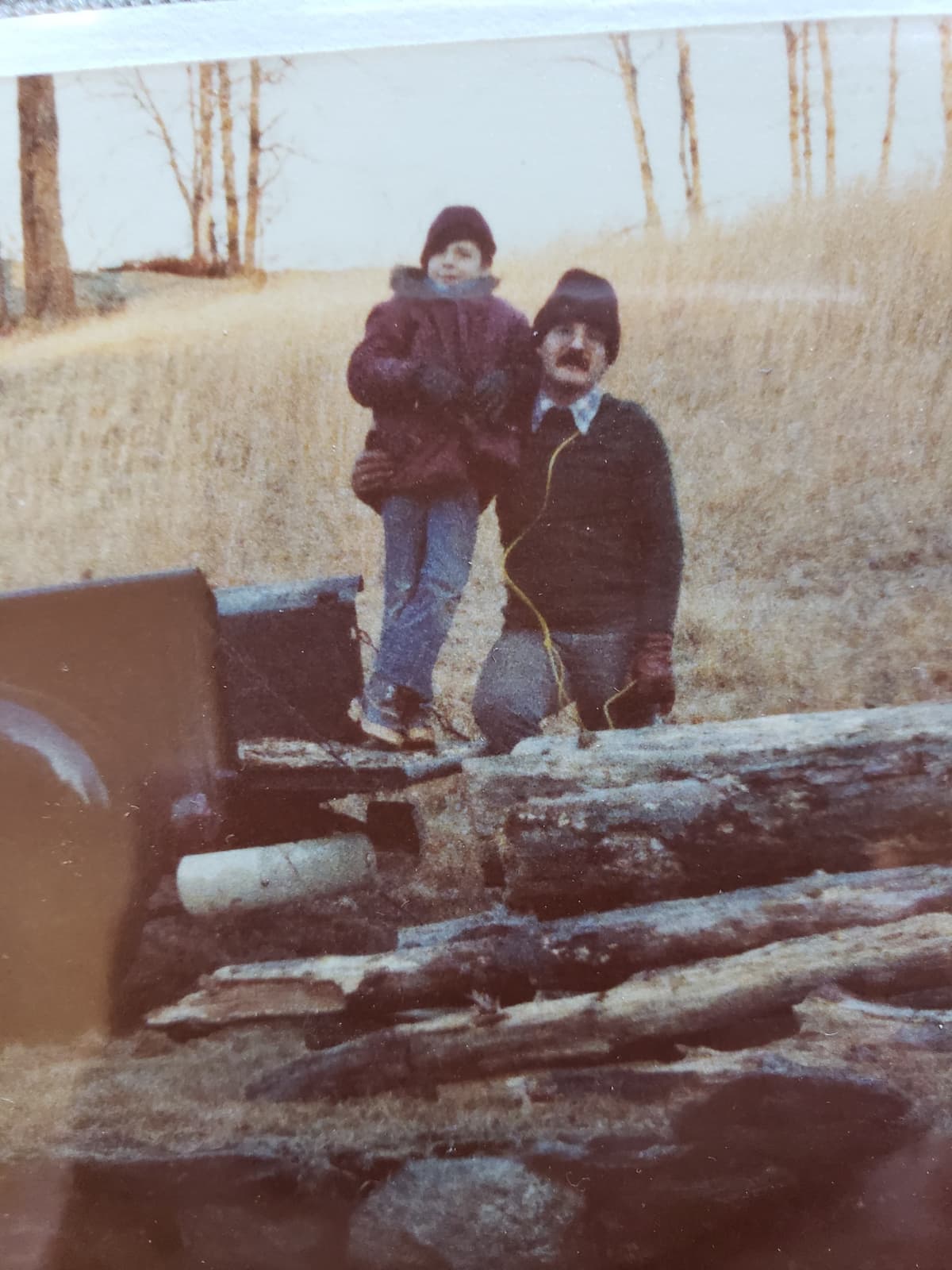
My mom saw all of this. And she had her own plans for me.
She respected the skills and dedication it takes to master a craft—whether that's wiring a panel, fitting a pipe, or transforming a landscape. But she knew how hard things could be without options. She knew because she'd lived it.
So she made sure I went to college. That was non-negotiable. She pushed because she wanted me to have choices she never had.
I became the first person in my immediate family to graduate.
My parents have always been in my corner. Different lessons, same love. Together, they shaped everything that came next.
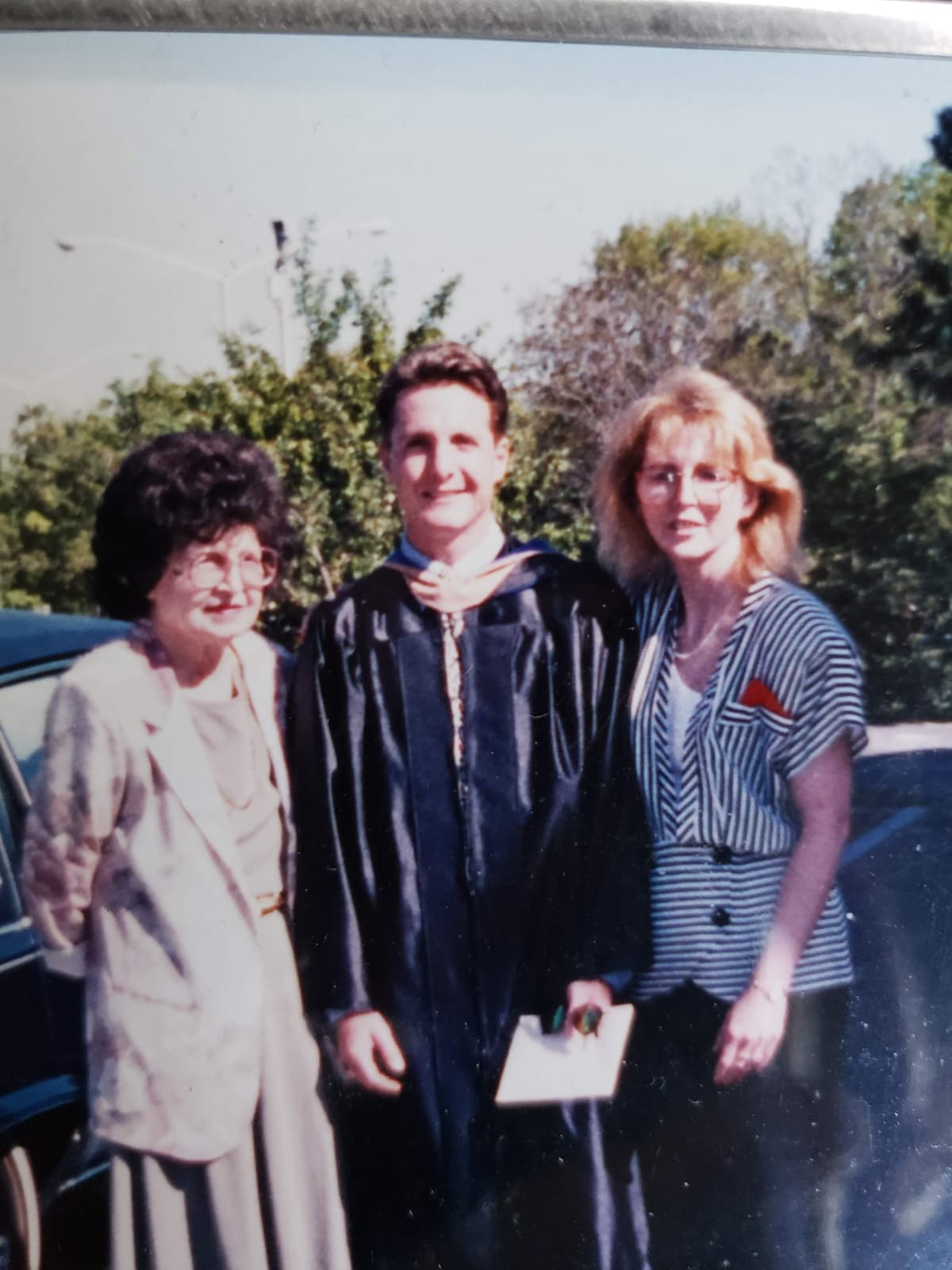
So I took my mom's advice and ran with it.
College. Business degree. The corporate route.
Over twenty-five years, I built a career in digital commerce and product management—scaling teams across nine countries, turning around P&Ls, growing practices from zero to $40 million in revenue. I've led organizations of 165+ people. Transformed a business hemorrhaging $500K monthly into one generating $1.5M+ in profit. Sat across the table from Fortune 500 CEOs and helped them see around corners.
That experience taught me how to build things that work at scale—products that serve millions of customers, teams that deliver under pressure, systems that don't break when you push them.
Somewhere along the way, I became a homeowner.
Not just any homeowner—I've been the general contractor on multiple complete gut remodels of my own homes. On-site at 6 AM. Hauling materials. Coordinating subs. Solving problems on the fly.
I remembered what it felt like to do the work. And I started talking to the people doing it with me.
They could tell I knew what I was doing—so they talked to me straight. I asked questions. I listened. I watched how they ran their businesses—or tried to.
The same problems came up. Every time. Every trade.
"I miss calls all day. By the time I call back, they've already hired someone else."
"I hate chasing money. The job's done—why do I have to beg to get paid?"
"I'm up until 10 PM doing paperwork. I haven't had dinner with my family all week."
Master electricians. Third-generation plumbers. HVAC techs who can diagnose a system by sound alone. Roofers, landscapers, painters, handymen, locksmiths—every one of them faces the same problem.
They didn't get into this work to do scheduling, invoicing, marketing, collections, and dispatch.
They got into it because they're damn good at solving problems for people.
The business side is crushing them.
Then everything changed.
My company was going private. Executive team got consolidated. My role was eliminated.
After twenty-five years across multiple companies—retail, digital, consulting—I was suddenly asking myself: what's next?
I know a lot of talented people in the same spot right now. People with impressive track records who can't get an interview. But I wasn't looking to just find another role. I was looking for something that mattered.
And somewhere in that process, an idea showed up. I don't even know exactly when. It was just there—clear and urgent. All those conversations with contractors. All those frustrations I'd heard. All that experience I'd built solving complex problems at scale.
It all pointed to the same place.
Not away from my career—but through it. My roots and my expertise, finally coming together.
Here's what most people don't realize: the trades are in crisis.
8.2 million construction workers in America. Over 20% are 55 or older. The median age is 42—and the physical demands mean most can't work into their sixties.
We're losing 150,000 to 200,000 skilled professionals to retirement every year. And we're not replacing them.
Only 290,000 active apprentices in the country. Forty percent drop out. We're producing 112,000 completers annually across all trades.
By 2028, we'll be short over 3 million skilled workers. Plumbers alone face a shortage of 550,000 by 2027. HVAC is already short 110,000 technicians right now.
The ones who are left have to do more with less. More jobs. More customers. Fewer hands.
But how do you take on more work when you're drowning in admin? How do you grow when every missed call is a lost customer?
The very things crushing contractors today are the same things preventing them from doing more jobs and growing their business.
This is personal for me.
I have two sons. And I'm actively encouraging them to consider the trades.
Go to college. Get a business degree. Then go become an apprentice. Work your way to master electrician, or plumber, or whatever craft calls to you. Start your own company.
Both paths. Not one or the other.
Technology is reshaping industries overnight. My boys are in high school—who knows what the job landscape will look like when they're building careers?
But you know what's not going to change? The need for someone to wire a house. Fix a furnace. Stop a leak. Install a roof. Clear a drain. Build a deck. The skilled trades will always be essential—and they're only becoming more valuable as the workforce shrinks.
The same wisdom I got from my parents—work ethic and options—that's what I'm trying to instill in my boys.
And I know that when they get there, they'll face every one of these challenges. The missed calls. The chasing payments. The paperwork that keeps them from their families.
Unless someone builds something to fix it.
I'm not a licensed contractor. I'm not pretending to be one.
But I know what it feels like to work until dark. I know what family businesses look like—and what it costs to keep them running. And I know how to build something that actually works.
Everything I've learned—the product thinking, the operational discipline, the technology platforms, the P&L obsession—all of it was preparation.
PriorityCustomer.ai is my attempt to bring lifelong preparation to the right opportunity.
Because the people who do the hardest work shouldn't drown in the parts of business they never signed up for.
Because your phone should get answered.
Because your invoices should get paid.
Because you should have dinner with your family.
That's why I'm here!